
Introduction
In today’s digital world, cybersecurity is more important than ever. As businesses and individuals rely on technology, the risks of cyberattacks continue to grow. Hackers exploit vulnerabilities in software, networks, and even human behavior to gain unauthorized access to sensitive data.
For developers, cybersecurity isn’t just an afterthought—it should be a core part of the development process. A single security flaw can expose entire systems to attacks, causing financial losses, reputational damage, and even legal consequences.
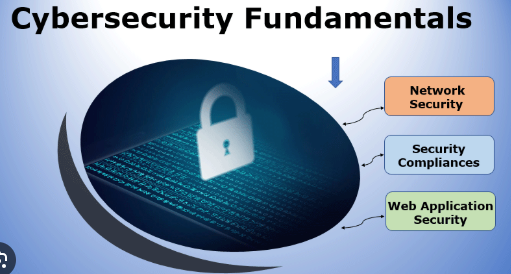
This blog post will introduce fundamental cybersecurity concepts that every aspiring developer should know. By understanding common cyber threats and implementing best practices for secure coding, you can build software that is not only functional but also resilient against attacks.
Understanding Cyber Threats
Before we dive into security best practices, it’s essential to understand the types of threats developers face. Some of the most common cyber threats include:
1. Malware (Viruses, Ransomware, Spyware)
Malware is malicious software designed to harm, exploit, or steal data. Ransomware, for example, encrypts a victim’s files and demands payment for their release. Spyware silently collects sensitive data, while traditional viruses and worms spread rapidly, disrupting systems.
2. Phishing Attacks
Phishing is a social engineering technique where attackers trick users into providing sensitive information, such as usernames, passwords, or financial details. This is often done through fake emails or websites that mimic legitimate services.
3. SQL Injection (SQLi)
SQL Injection is a code injection attack where malicious SQL queries manipulate a database. If an application does not properly validate user input, an attacker can execute unauthorized commands, potentially accessing or deleting entire databases.
4. Man-in-the-Middle (MITM) Attacks
In MITM attacks, hackers intercept communication between two parties, often over unsecured networks. This allows them to steal login credentials, inject malicious code, or manipulate transmitted data.
Understanding these threats is the first step toward developing secure software. Now, let’s explore the best practices developers can follow to prevent these attacks.
Best Practices for Secure Coding
1. Input Validation & Sanitization
One of the most common vulnerabilities in applications is improper input handling. Attackers often exploit user input fields to inject malicious code. To prevent this:
Validate all input using whitelists (defining allowed characters) instead of blacklists (blocking specific characters).
Use parameterized queries in SQL to prevent SQL injection.
Escape special characters in inputs to avoid cross-site scripting (XSS) attacks.
2. Authentication & Authorization
Strong authentication and authorization mechanisms are critical for protecting user accounts and data. Developers should:
Enforce strong password policies (e.g., minimum 12 characters, mix of uppercase, lowercase, numbers, and symbols).
Implement multi-factor authentication (MFA) for an extra layer of security.
Use role-based access control (RBAC) to limit user permissions.
3. Secure Data Transmission
Data in transit should always be encrypted to prevent interception. Best practices include:
Using HTTPS instead of HTTP to secure web traffic.
Encrypting sensitive data with algorithms like AES (Advanced Encryption Standard).
Hashing passwords with secure hashing functions such as bcrypt or Argon2.
4. Error Handling & Logging
Improper error handling can expose valuable system information to attackers. Developers should:
Avoid displaying detailed error messages to users (e.g., database errors).
Log errors securely and monitor logs for suspicious activity.
Implement structured exception handling to catch and manage errors effectively.
5. Keeping Software Updated
Cybercriminals often exploit outdated software with known vulnerabilities. To mitigate risks:
Regularly update all dependencies, frameworks, and libraries.
Apply security patches as soon as they become available.
Use automated vulnerability scanning tools to detect security flaws.
Essential Cybersecurity Tools for Developers
Developers can use various tools to identify and fix security vulnerabilities before attackers exploit them. Some essential cybersecurity tools include:
OWASP ZAP – An open-source security scanner for web applications.
Burp Suite – A toolkit for penetration testing and identifying security flaws.
Wireshark – A powerful network analysis tool to monitor traffic and detect anomalies.
Hashcat – A password recovery tool useful for testing password strength.
Using these tools regularly can help developers identify weaknesses and strengthen their applications.
The Role of Cybersecurity in Career Growth
Employers highly value cybersecurity skills, especially in roles related to software development, system administration, and IT security. Developers who understand security principles stand out in job applications and can pursue specialized roles such as:
Security Software Engineer
Penetration Tester (Ethical Hacker)
Cybersecurity Analyst
Application Security Engineer
To further enhance cybersecurity expertise, developers can pursue certifications such as:
CompTIA Security+ – A beginner-friendly certification covering fundamental cybersecurity concepts.
Certified Ethical Hacker (CEH) – Focuses on penetration testing and ethical hacking techniques.
Certified Information Systems Security Professional (CISSP) – An advanced certification for cybersecurity professionals.
Conclusion
Cybersecurity is an essential aspect of software development, and every aspiring developer should prioritize security from the start. By understanding common cyber threats and following secure coding practices, developers can build applications that are resistant to attacks.
To further explore cybersecurity, consider taking online courses, experimenting with security tools, and staying updated on the latest threats. Security is an ongoing process, and continuous learning is key to staying ahead of cybercriminals.
By integrating cybersecurity into your development workflow, you not only protect your applications but also enhance your value as a tech professional.